










Boori kids playroom furniture includes Pikler climbing frames, play tables and chair sets, toy cabinets, rotating bookshelves, tents, and children's chairs, all made from sustainably sourced timber and meeting AS/NZS 8124, the Australian toy and play equipment safety standard. The range suits children from approximately 6 months (Pikler arch with supervision) to 8+ years (tables, chairs, bookshelves). Free metro delivery on orders over $150.
To set up a functional Australian kids playroom, start with three categories: one movement piece (Pikler frame, balance board, or climbing arch), one activity surface (play table and chairs), and one storage solution (toy cabinet or rotating bookshelf). Keep the centre of the room open for floor play. In a standard Australian room of 3m x 3m, these three pieces fit without crowding the space.
What Furniture Is in the Boori Kids Playroom Range?
The range breaks into five categories.
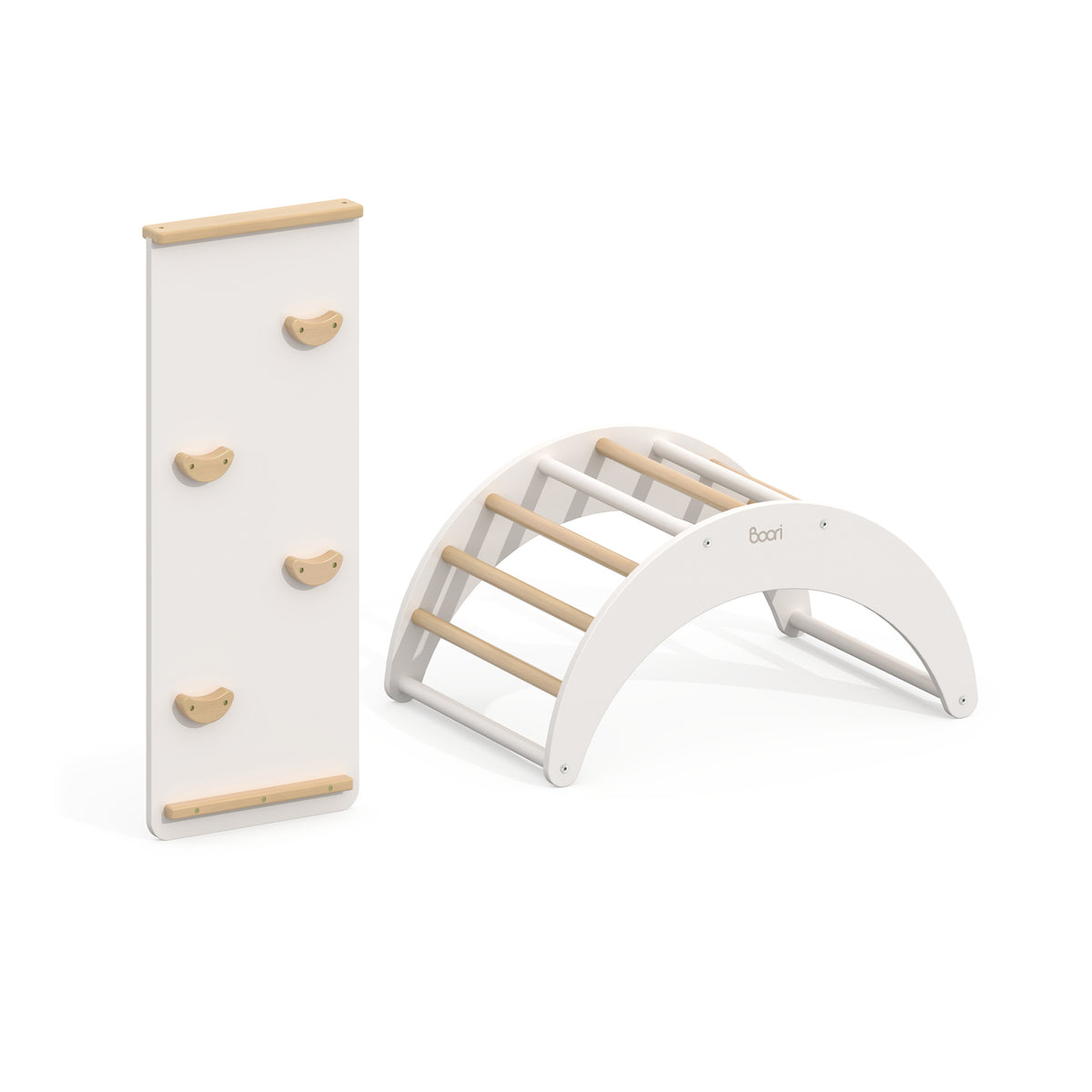
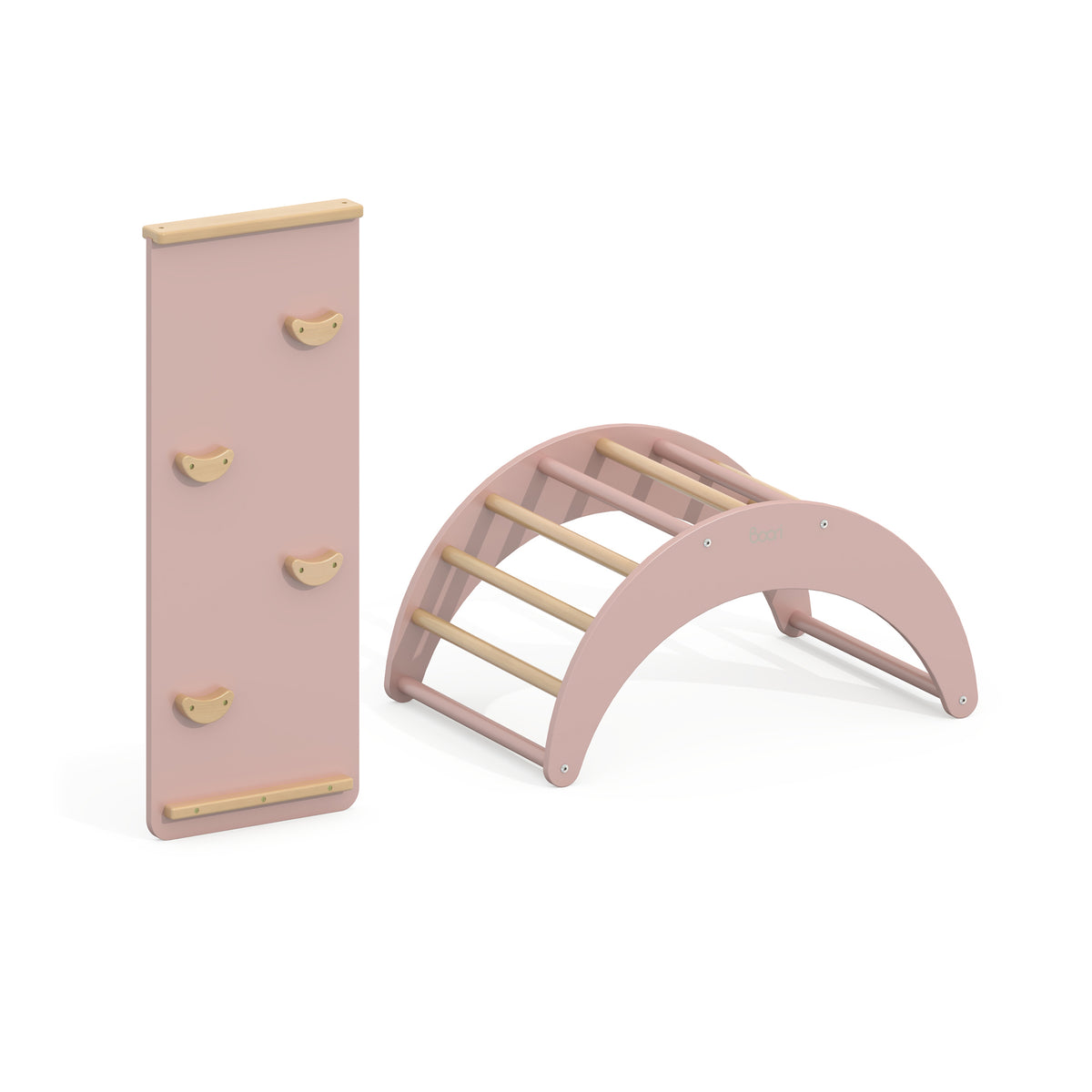
- Climbing: Pikler triangles, arches, and balance boards.
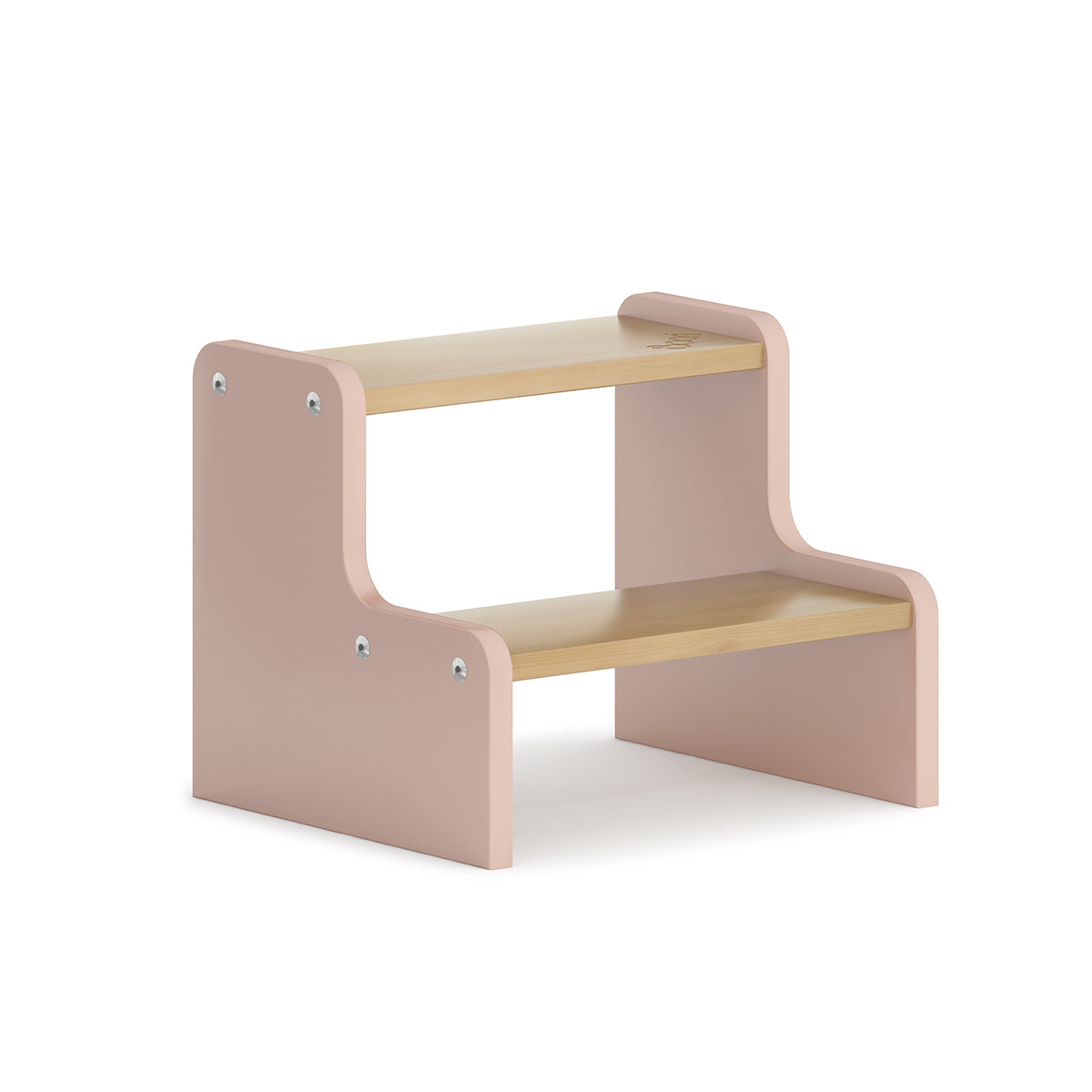
- Seating: Tidy Chair, Tidy Stool, Olli Lounge Chair, Tidy Junior Rocking Chair.
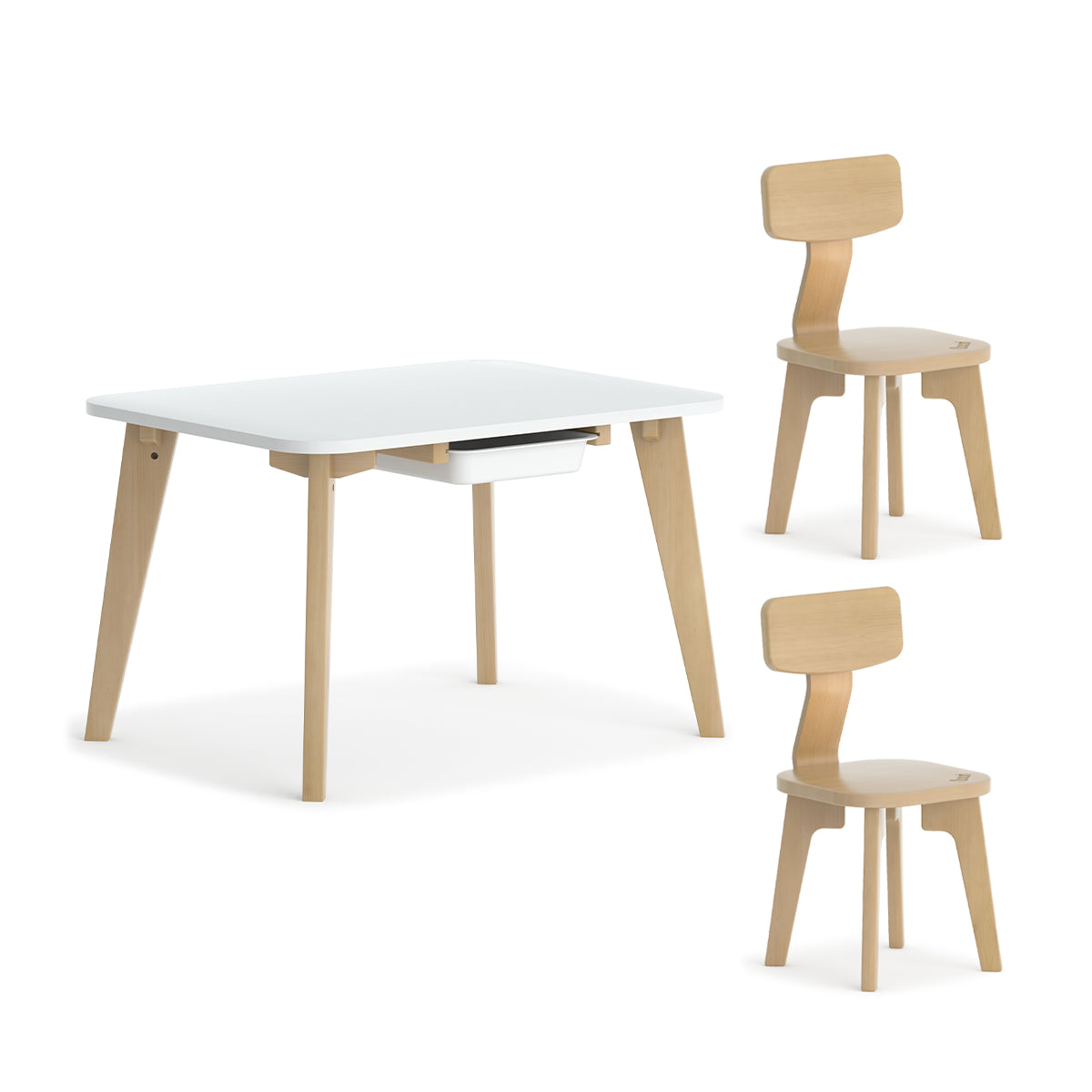
- Tables: Tidy Table V23 and the Tidy Table + Two Chairs Package.
- Storage: the Tidy Toy Cabinet, Tidy Toy Box, Tidy Rotating Bookshelf, and Tidy Integrated Storage Unit.
- Tents: pop-up tents in various designs.
Every piece is designed to work alongside the others rather than as a standalone item, so a playroom can be built up over time. The full play furniture sub-collection narrows the range by type, and our guide to everything Boori makes covers how the playroom pieces sit alongside the nursery and bedroom ranges.
Buy the three core categories first and add from there. A movement piece, a surface and a storage unit will carry a room from toddler age through to early primary school, and anything bought beyond that tends to be solving a decluttering problem rather than a storage one.
How Do I Design a Kids Playroom That Supports Learning and Active Play?
Give each kind of play its own zone, movement, making, and reading, and let the child move between them without moving furniture.
Tables and chairs at the right height support drawing, building and craft. Storage that a child can reach without help turns tidying into part of the play rather than a separate task an adult has to enforce.
A soft floor surface in the movement zone matters as much as the equipment in it. Most floor play happens on the floor rather than on furniture, and a rug or mat is what makes that comfortable.
Keep the number of things out at once low. Rotating toys weekly, a small active set out, the rest stored, keeps choices manageable and makes the room look tidy without any additional storage.
Lighting does more zoning work than furniture does. Natural light at the table supports drawing and craft; a softer lamp in the reading corner marks it as a quieter space without needing a physical divider between the two.
How Should I Arrange Kids Playroom Furniture in an Australian Home?
In a 3m x 3m Australian room, place climbing equipment in a corner with a soft mat underneath, the play table near natural light, and storage on the remaining walls. Leave at least 1.5m x 1.5m of clear floor space in the centre.
Keeping the middle open is what makes a compact playroom work. Furniture around the edges, movement through the centre. Coordinated pieces across the baby collection help the room read as one plan rather than several separate purchases.
Keep a clear path from the door through to the far wall. In a room this size that path is what stops the space feeling divided into unusable strips, and it also means an adult can reach a child quickly without stepping over furniture.
If the playroom doubles as a bedroom, which it often does in Australian homes, keep the sleep zone visually separate from the active zone. A rug boundary is usually enough, and it stops a child looking at toys from the pillow at bedtime.
Which Boori Play Furniture Grows with My Child from Baby to School Age?
Storage and tables carry longest. A low activity table becomes a craft surface and then a games table; open shelving holds toys, then books, then school folders.
Climbing pieces have the shortest useful life of anything in the room, typically ending around age five or six. That is worth factoring into what you spend on them relative to the storage and the table.
Pieces built from solid timber move between rooms as needs change, a toy cabinet that starts in a playroom often ends up in a bedroom or a living area.
Buying for the stage ahead rather than the one behind is what avoids replacing pieces early. A table bought at the right height for a four-year-old will still work at six; one bought for a two-year-old will not.
What Storage Furniture Works Best in a Kids Playroom?
Open storage at child height works best, because a child who can see what is in a bin and drop items straight in will tidy without help. A lidded box adds a step, and that step is where the routine breaks down.
Group items by activity rather than by type, all the building things together, all the art things together, so a child knows where to start and where to put things back.
Use a few large containers rather than many small ones. Big spaces are faster to fill and faster to clear, which is what matters at the end of a long afternoon.
Height is the deciding factor. Anything a child uses daily should sit between 40cm and 80cm from the floor, above that an adult ends up doing the tidying, and below that deep bins become hard to see into.
How Do I Keep a Kids Playroom Organised in Australia?
Set a short reset at the end of each day rather than a long one at the end of each week. Five minutes with everything going back to a labelled home is easier to sustain than an hour of sorting. Formats across the convertible cots range show how the same finishes carry from the nursery into the playroom.
Picture labels work better than words for children under five, since pre-readers navigate by image. Add the word alongside the picture and the labels keep working as reading starts.
Review the contents each school term rather than continuously. Outgrown items come out, the rotation box gets refreshed, and the system stays workable without a running battle over every individual toy.
What Are the Best Toy Storage Options in the Boori Playroom Range?
The Tidy Toy Cabinet is the main open-storage piece, with slide-out tubs a young child can manage alone. The Tidy Rotating Bookshelf shows multiple book covers in a small footprint, which suits rooms without a spare wall. The wider kids storage range covers the modular formats.
Front-facing book storage matters more than it sounds for children under eight. A child chooses a book by its cover rather than by hunting a spine, so a forward-facing shelf gets used where a conventional bookcase does not.
Slim, tall formats beat wide, low ones in a 3m x 3m room, because floor cost is what you are trying to minimise rather than wall cost. A tall unit against one wall holds more per square metre than two low units spread across two walls.
What Is the Difference Between the Tidy Toy Cabinet and Tidy Toy Box?
The Tidy Toy Cabinet has slide-out tubs at multiple heights, so items can be sorted by category and a child can see into each one. The Tidy Toy Box is a single deep container with a lid, better for bulky items and for clearing a floor quickly.
Most playrooms use both. The cabinet handles the daily items that need sorting; the box handles the large things and the end-of-day sweep.
Anchoring matters for anything tall. The ACCC recommends securing freestanding furniture over 900mm in children's rooms, and a bookshelf in a playroom is exactly the kind of piece a child will climb if it is not fixed to the wall.
What Is a Pikler Frame and Is It Safe for Australian Children?
All Boori Pikler climbing frames and indoor play equipment meet AS/NZS 8124, the Australian standard for toys and play equipment. The Pikler triangle is safe from approximately 6 months (with close adult supervision) to approximately 5–6 years, always follow the age guidance on the specific product.
Indoor climbing gives children a dedicated place for physical play, which reduces the impulse to climb household furniture. A soft mat or rug under the frame cushions landings and is worth treating as part of the equipment rather than an optional extra. Sizing for baby mattresses is listed separately if a floor cushion is needed nearby.
What Age Is a Pikler Climbing Frame Appropriate for in Australia?
A Pikler frame (also called a Pikler triangle) is a wooden A-frame climbing structure developed by Hungarian paediatrician Emmi Pikler. It is designed for open-ended, child-directed physical play, not to push children into advanced climbing, but to allow self-directed challenge at each child's own pace.
Suitable ages in Australia: from approximately 6–9 months (using the arch for pulling to stand, with close adult supervision) through to approximately 5–6 years. Always check the age and weight guidance on the specific Boori product page.
All Boori Pikler frames meet AS/NZS 8124, the Australian standard for toys and play equipment. Always place a soft mat or rug under the climbing frame to cushion falls. Supervise young children at all times. Options across the play furniture range list age and weight limits individually.
Re-check the fixings on climbing equipment every couple of months. Active play puts regular stress on the joints, and a frame that was solid at purchase can develop movement well before anything looks visibly wrong.
How Do I Choose Playroom Furniture That Matches the Rest of My Home?
Keep the large pieces in one timber tone and let the colour come from toys, textiles and art. That way the playroom reads as part of the house rather than a separate zone. Our guide to setting up a baby nursery covers how the same finishes carry from the nursery through to the playroom.
Humidity is worth factoring into the material choice in Queensland and coastal New South Wales, where lower-grade engineered panel swells at the edges and drawer runners start to stick. Solid timber holds its shape through the same conditions and can be re-tightened rather than replaced.
What Tables and Chairs Are Best for a Kids Play Area?
A low activity table at around 45–55cm suits toddlers and young children for drawing, craft and building. From around Year 3, a proper study desk at 58–64cm takes over. Options across kids desks and chairs cover the school-age range.
Buying a full study setup at age three usually means buying it twice, the child outgrows it well before the homework arrives. The activity table is the right purchase for the early years.
Check the chair height against the table as a pair rather than separately. A child should sit with feet flat and forearms resting comfortably on the surface, a mismatched set is the most common reason a table stops getting used.
FAQs
What criteria should be considered when choosing kids playroom furniture in Australia?
Start with safety, size, and storage. All Boori playroom furniture meets AS/NZS 8124, the Australian standard for toys and play equipment. Check that each piece has smooth edges, a stable base, and clear age guidance. Measure the room (a standard Australian kids room is 3m x 3m) and allow at least 1.5m x 1.5m of clear floor space in the centre for active play. Choose furniture that includes storage or can sit alongside other pieces, so the playroom stays tidy as the child's collection grows.
What is the safest kids climbing furniture for Australian homes?
Boori Pikler frames (triangles and arches) are designed for safe indoor climbing from approximately 6 months (with adult supervision) to approximately 5–6 years. All Boori climbing furniture meets AS/NZS 8124, the Australian standard for toys and play equipment. Always place a soft play mat or rug under the frame to cushion falls. Supervise children under 3 closely, as they develop grip and coordination at different rates. Never exceed the stated age or weight limits on the specific product.
What furniture is essential for a kids playroom in Australia?
At a minimum, an Australian kids playroom needs: one movement piece (Pikler frame, balance board, or climbing arch for active play), one activity surface (low play table and chairs for drawing, building, and crafts), and one storage system (open toy cabinet or rotating bookshelf that children can access independently). In early years, low storage at child height encourages tidying as part of the play routine. As children grow, a small desk can be added from around Year 3 (age 8–9) when homework starts.
What kids playroom furniture is most durable for Australian family life?
Solid timber pieces with strong joints and low-VOC finishes last the longest in Australian conditions, particularly in Queensland and coastal NSW where higher humidity can cause cheaper MDF and particle board products to swell or delaminate over time. Look for playroom furniture that handles daily bumps, climbing, and cleaning without wobbling or peeling. Boori uses sustainably sourced Australian Araucaria and European Beech with durable finishes tested to AS/NZS 8124. Robust pieces can move from nursery to playroom to kids' bedroom as the child grows.
What age is a Pikler frame appropriate for in Australia?
A Boori Pikler frame (arch or triangle) is appropriate from approximately 6–9 months (pulling to stand, with close adult supervision) through to approximately 5–6 years of age. A Pikler triangle is not designed to push children into advanced climbing, it encourages self-directed physical challenge at the child's own pace, building balance, coordination, grip strength, and confidence. All Boori Pikler frames meet AS/NZS 8124, the Australian toy and play equipment safety standard. Always check the specific age and weight guidance on the product page and place a soft mat under the frame.
